News
What is factoring? Comprehensive financial solution from SeABank
 17/10/2025
Understanding what factoring is will help managers open up a new direction, be more proactive in financial management, and business development.
Are you struggling to find ways to improve your cash flow to maintain stable operations? Factoring is the right solution. So, how do you do it? What is factoring? And how to make effective use of this tool? In this article, SeABank will provide businesses with the information they need to know about this financial solution.
What is factoring?
According to Law on Credit Institutions 2024 (Clause 1, Article 4) the definition of factoring is as follows:
“Factoring is a form of credit provision through the purchase of the seller's receivables or advance payment on behalf of the buyer according to the contract for the purchase and sale of goods and provision of services between the buyer and the seller.”

Factoring is one of the forms of credit for businesses.
Current types of factoring
There are many criteria for classifying payment factors, thereby helping businesses easily visualize the forms as well as choose products suitable for their needs. Below are two common classification methods that businesses can refer to:
Classification by object:
- Seller-side factoring with a return commitment: This is a form of credit through which a financial institution purchases the seller's receivables. In case the buyer does not pay or does not pay in full, the seller will have to repay the amount that has been factored.
- Seller factoring with non-refundable commitment: In this form, the financial institution purchases the receivables and directly collects the debt from the buyer. The seller is not responsible for repayment if the buyer fails to perform or does not fully perform the payment obligation.
- Buyer factoring: This is a form of credit in which the financial institution advances payment to the seller by purchasing the receivables. The buyer will be responsible for repaying the amount advanced according to the agreement.
Classification by territorial scope:
- Domestic factoring: This is a form of factoring arising from a contract for the sale of goods or provision of services where both the seller and the buyer are residents of the same country.
- International factoring: Factoring is a payment activity based on a contract for the import and export of goods or the provision of services, in which there is participation of a domestic resident party and a non-resident party abroad.

There are many different ways to classify factoring.
Benefits of factoring for businesses
Factoring is a flexible financial solution that helps businesses optimize cash flow, minimize risks, and improve operational efficiency. Below are the outstanding benefits that businesses can receive when applying this form:
- Increase cash flow and capital turnover effectively: Factoring helps businesses receive money immediately after delivery and invoice issuance. This helps provide timely capital for businesses to reinvest, pay operating costs, or expand production.
- Credit risk mitigation: When transferring receivables to the factor, the business also transfers the burden of default or late payment risks from the customer. The factor will be responsible for debt collection, helping the business feel more secure in doing business.
- Save time and management costs: Instead of spending time and resources on monitoring, reminding, and collecting debts, businesses can focus on core activities. This helps save on personnel and operating costs, while optimizing work performance.
- Expanding business opportunities: Thanks to abundant cash flow, businesses can boldly seize new investment opportunities, expand markets, or provide flexible payment policies to customers, thereby improving competitiveness and increasing sales.

Factoring helps businesses rotate capital more effectively
Which bank's payment factoring solution should I use?
Currently, many banks and financial institutions deploy factoring services to help businesses proactively source capital and reduce short-term cash flow pressure. However, to ensure efficiency and safety, businesses should choose reputable units with experience in the field of trade finance and understanding the actual needs of each industry.
In particular, SeABank is one of the reliable choices, trusted by many businesses. With experience working with many large partners, SeABank offers flexible payment services, simple procedures, and fast processing time.
Outstanding benefits when businesses choose payment factoring at SeABank:
- Advance up to 90% receivables value, helping businesses proactively rotate capital.
- Helps businesses save costs with lower interest rates than loan interest rates, and no collateral is required.
- Simple application procedures shorten disbursement time.
- Save time and cost in tracking and collecting receivables.
In particular, SeABank's domestic factoring product is designed to suit businesses operating in the fields of trade, production, services, etc. that need to advance capital based on contracts or invoices with domestic partners.
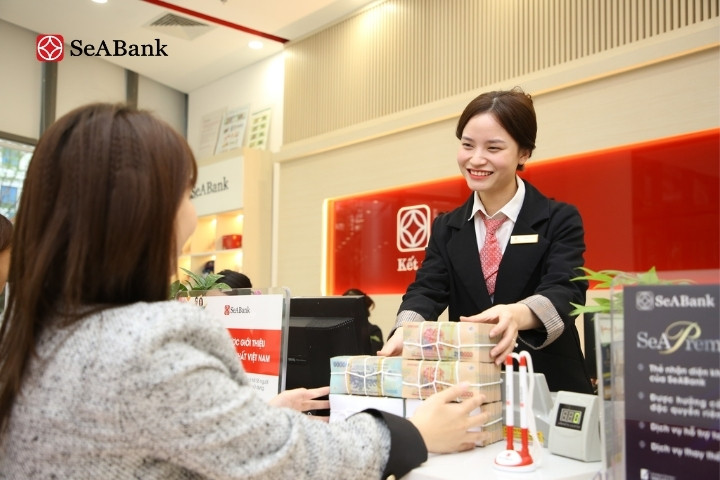
Payment factoring at SeABank is designed to suit many business models.
Conclude
Clearly understand what factoring is. will help businesses proactively manage cash flow, reduce risks, and increase competitiveness in the market. If your business is looking for a flexible, transparent, and secure financial solution, explore the payment factoring services provided by SeABank. This is a solid stepping stone for businesses to develop sustainably and seize business opportunities more effectively.
For more information, please call hotline 1900 599 952 or contact the nearest Branch/Transaction Office for advice and support.
Related News
What is the annual fee? Which bank has a preferential annual fee? 17/10/2025
Easy global transactions with SeABank international payment card 17/10/2025
What is a Visa card? Where should companies to open a Visa card? 17/10/2025
What is a credit card PIN? Effective security guide 17/10/2025
What is 3D Secure? Protecting online transactions for businesses 17/10/2025
What is the annual fee? Which bank has a preferential annual fee?
What is the annual fee? The annual fee is a recurring fee that the bank applies every year to maintain the utilities and services that come with the card
17/10/2025
Read more

Easy global transactions with SeABank international payment card
With many outstanding features and attractive incentives, SeABank international payment card brings more convenience and safety to businesses in global transactions.
17/10/2025
Read more
What is a Visa card? Where should companies to open a Visa card?
Understanding what a Visa card is not only helps businesses optimize international transactions but also enhances their reputation in the eyes of partners and customers. Let's find out now.
17/10/2025
Read more